https://www.aincresing.com/the-tapestry-of-american-identity-culture-cuisine-and-history/
Thanksgiving is one of the most symbolic holidays in the United States. It’s more than just a feast of turkey, pumpkin pie, and family reunions; it’s a historical narrative about faith, immigration, national spirit, and cultural identity. From the Pilgrims’ transatlantic migration in the early 17th century to the diverse celebrations of American society today, Thanksgiving has witnessed the formation of the American national character and the evolution of its cultural values. It represents a continuation of religious sentiment, a solidarity of social sensibilities, and a cultural symbol of “home,” “land,” and “faith.”
1. The Puritan Migration and the Origin of “Thanksgiving”
The origins of Thanksgiving can be traced back to 1620. That year, the Puritans from England left their homeland on the Mayflower, traveling to the Americas in search of religious freedom. For these Puritans, faith was paramount. Dissatisfied with the oppression of the Church of England, they hoped to establish a “New Jerusalem” where they could worship God freely. However, the journey was fraught with danger—hunger, cold, and disease claimed the lives of nearly half of them.
In 1621, the surviving Puritans celebrated a bountiful harvest during their first autumn in America. With the help of the Native Americans, particularly the Wampanoag, they learned to grow corn, hunt, and fish. To thank God for this gift and the Native Americans for their assistance, they held a three-day celebration. This was the forerunner of what would later become Thanksgiving—a ceremony that blended religious faith with the spirit of mutual aid.
In those days, Thanksgiving wasn’t an annual holiday, but rather a special occasion to express gratitude for God’s blessings. It was both a Puritan religious observance and an expression of immigrants’ awe for the New World. That simple prayer and feast symbolized the human faith reborn from despair and also opened the source of the American national spirit—resilience, gratitude, and faith.
II. Nationalization of Festivals: From Local Tradition to National Celebration
As the colonies grew, Thanksgiving celebrations gradually spread across North America, though the dates and forms varied. By the 18th century, the outbreak of the American Revolutionary War imbued the religious holiday of Thanksgiving with political and national significance. In 1789, George Washington proclaimed a national day of thanksgiving to thank God for the nation’s independence and peace. This marked the first time Thanksgiving was established as a national holiday, marking its transformation from a religious observance to a national symbol.
However, it was 19th-century social advocate Sarah Hale who, as an editor and cultural promoter, wrote articles advocating for a national day of thanksgiving for years, believing such a holiday would strengthen American families and national cohesion. Finally, amid the turmoil of the Civil War, President Abraham Lincoln officially proclaimed in 1863 that the last Thursday of November would be designated as a day of thanksgiving to thank God for the bountiful harvest and national unity.
This decision had profound political implications: Thanksgiving ceased to be simply a celebration of faith and became a ritual of national healing. Civil War-era America needed a shared bond to heal its fractures, and the theme of gratitude perfectly met this need. Lincoln established it as a national holiday to remind people that, amidst war and division, there were still things to be thankful for: family, land, faith, and country.
3. The Return of Family: The Heartwarming Core of Modern Thanksgiving
While early Thanksgivings carried religious and political significance, modern Thanksgiving has returned to the theme of family reunion. Despite the changing times, this holiday has always symbolized homecoming and reunion. Every November, countless Americans travel thousands of miles to share a feast with their families, symbolizing a bountiful harvest and gratitude.
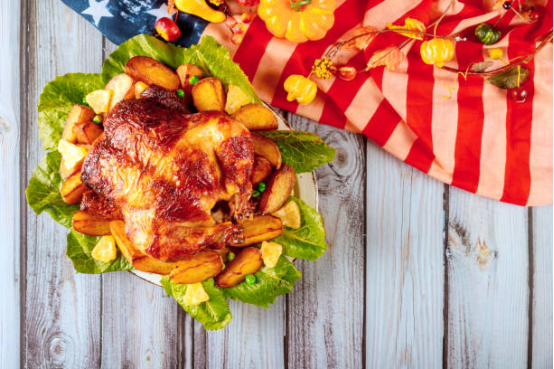
Turkey has become the iconic Thanksgiving dish, and its symbolic meaning transcends taste. It represents sharing and blessing—much like the sharing of prey between the Puritans and Native Americans. Traditional dishes like pumpkin pie, cranberry sauce, corn, and mashed potatoes also carry the flavor of history, gifts from the bountiful lands of the New World and a continuation of cultural memory.
More importantly, Thanksgiving embodies American family values. It’s a time for people to put aside their busy lives and disagreements and re-examine the people and things in their lives that are cherished. Regardless of social class, race, or faith, the core emotions of Thanksgiving remain the same: gratitude for life, cherishing family, and embracing one’s roots. This family-centered cultural concept has not only shaped the emotional foundation of American society but has also become a key cultural symbol throughout the Western world.
Despite the commercial bustle of the televised Macy’s Thanksgiving Day Parade, football games, and the shopping frenzy of Black Friday, there remains a heartwarming core of family and togetherness—the very soul of the holiday season. Even in the digital age, these emotions continue to draw millions of Americans home.
4. Cultural Diversity and Integration: From a Single Faith to a Multi-ethnic Celebration
As American society becomes more diverse, the cultural meaning of Thanksgiving continues to evolve. A Puritan religious holiday, it has become a universal holiday that transcends faith and ethnicity. Catholics, Jews, Muslims, and even non-believers celebrate Thanksgiving in their own ways. It is no longer simply a day of thanking God, but a day of gratitude for life and the kindness of others.
Immigrant cultures have also infused Thanksgiving with new flavors. In Latino, Chinese-American, and Indian families, traditional foods are blended with flavors from home—turkey might be served with Mexican chili sauce, Chinese soy sauce, or Indian spices. This cultural blending epitomizes the unity in diversity of American society. Thanksgiving has thus become a platform for cultural dialogue, a holiday where gratitude is the common language.
Modern American society has also given Thanksgiving a deeper social meaning, with charity and mutual aid becoming key themes. Volunteer organizations in many cities provide free meals to the homeless, while schools and churches hold fundraisers. People express gratitude through action, a spirit that is a modern extension of the original spirit of mutual aid among the Puritans and Native Americans.
5. From National Narrative to Human Sharing: The Universal Revelation of Thanksgiving
Throughout its development, Thanksgiving has evolved from a religious ceremony to a national holiday, and then to a cultural celebration shared by families and society. Its core has always been the word “gratitude”—gratitude for the gifts of nature, the help of others, the continuation of life, and the warmth of society.
In a sense, Thanksgiving embodies the duality of American culture: on the one hand, it celebrates individual striving and the spirit of freedom; on the other, it emphasizes the importance of family, faith, and community. This balance is the spiritual fulcrum that sustains American society. Amidst the tide of individualism, Thanksgiving allows people to rediscover the value of “community,” extending the concept of “family” beyond blood ties to encompass a sense of shared emotional connection.
From a global perspective, the spirit of Thanksgiving transcends national boundaries and has become a universal sentiment. In today’s turbulent world, gratitude is more than just a holiday ritual; it’s a state of mind—a respect for life, understanding for others, and a reverence for nature. As Abraham Lincoln said in his Thanksgiving proclamation, “Amidst trouble and trial, we have a thousand things to be thankful for.”
VI. Conclusion: A grateful heart is the eternal destination
From Plymouth Harbor in 1621 to the modern American holiday celebrated every November, Thanksgiving has a history of 400 years. It has witnessed the journey of a country from wilderness to prosperity, and the evolution of human faith, family, and social emotions.
The prayers of the Puritans have long faded, but their spirit lives on—a reverence for existence, gratitude for life, and faith in the future. Amidst the hustle and bustle of modern life, Thanksgiving allows people to reflect on their roots and reflect on what happiness and belonging truly are.
As the aroma of turkey fills the air and families gather around, Thanksgiving is more than just a holiday; it’s a time of emotional connection. It reminds us that no matter where we are, gratitude is the soul’s home. This warmth is the softest, yet most enduring, strength of American culture.
https://www.aincresing.com/the-tapestry-of-american-identity-culture-cuisine-and-history/